Case study · Custom manufacturing
Coin Nerd: Claude AI Operations Assistant
A scheduled Claude routine that cross-checks payments against the books, works out what every order and quote needs next, and tells the sales team exactly what to do, three times a day.

Highlights
- Payments cross-checked against estimates and invoices in the accounting software
- Every order gets a status, a next action and notes, written by Claude
- New quotes and re-orders tracked until someone replies
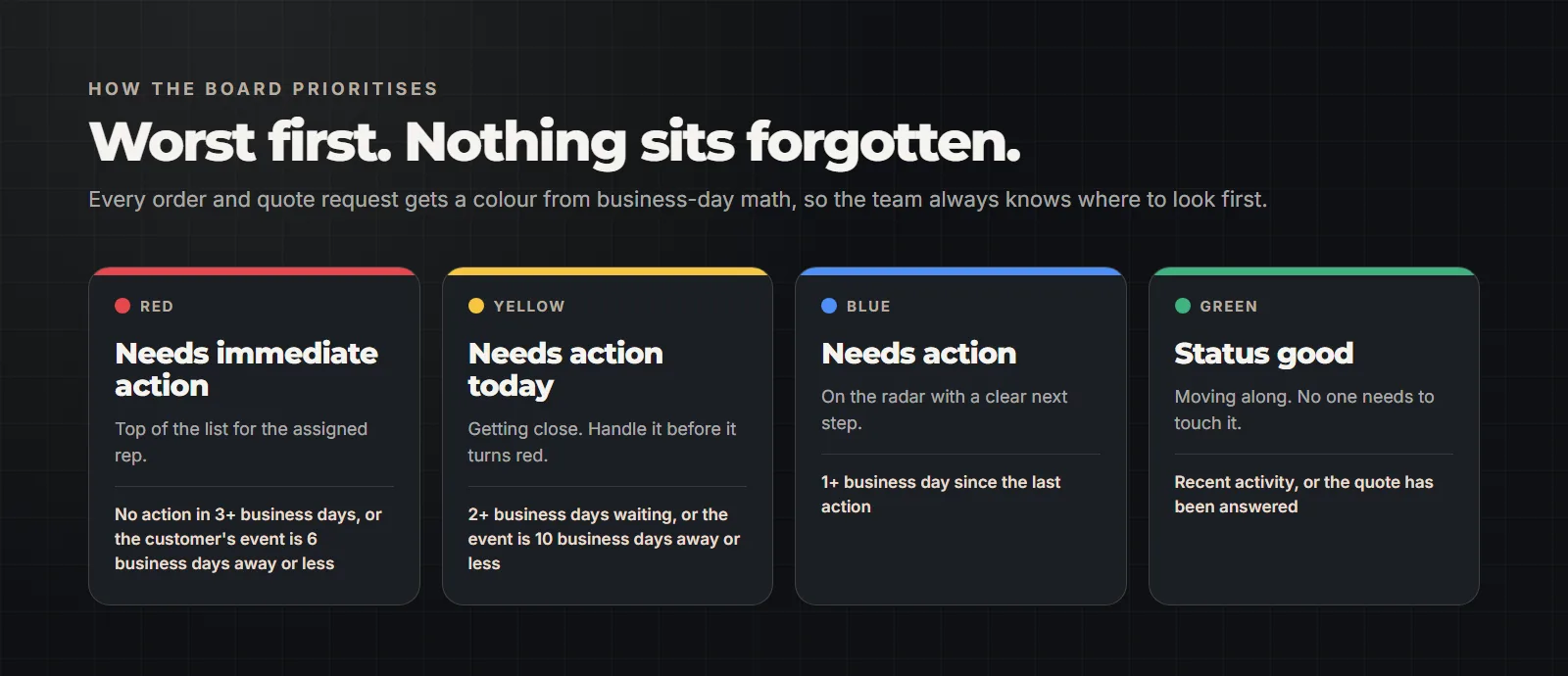
- Colour-coded urgency from business-day math: worst first
- A plain-English team summary, three times a day
The challenge
Coins For Anything runs a busy custom-order pipeline. Each order moves through artwork, customer edits, factory production, shipping and invoicing, with several sales reps juggling dozens of orders at once. The information was spread across the accounting software, email threads and the CRM.
The questions that mattered were hard to answer at a glance. Has this customer actually paid? Does the invoice match the order? Who’s waiting on whom? Which new quote hasn’t had a reply yet? Answering them meant someone checking every system by hand, every day.
What we built
We built the Coin Nerd, a Claude AI assistant named after the company’s mascot. It runs on a schedule three times a day and does the checking a person used to do.
- Analyses payments and keeps the books in line. Claude reads estimates, invoices and payments in the accounting software, cross-references them against each order, and flags anything that doesn’t line up, such as an invoice that needs updating.
- Works out what every order needs next. It reads the email threads with customers and the factory, then sets each order’s status (artwork, edits, production, in transit, ready to ship and more), writes the next action and leaves notes for the rep.
- Watches new quotes and re-orders. Every incoming request is tracked from the moment it arrives until someone responds, so no lead goes cold in an inbox.
- Tells the team what to do. Each rep gets their own view with the urgent items at the top. They’re also notified when a customer pays, so production can start right away.
- Writes a summary. Three times a day, the Coin Nerd posts a short plain-English recap of what changed and what needs attention.
How the board decides what’s urgent
Colours aren’t set by hand. They’re worked out live from business-day math (weekends and holidays don’t count) and the customer’s event date.
- Red: no action in three or more business days, or the customer’s event is six business days away or less.
- Yellow: two or more business days waiting, or the event is within ten business days.
- Blue: one business day since the last action.
- Green: moving along, or the quote has been answered.
The board always sorts worst first. It can also be exported to Excel in the same colour-coded format the team already used, so nobody had to change how they report.
Built to be trusted
Giving an AI write access to a live business system takes care:
- Claude connects through a custom MCP connector we built. It can only use a short list of tracker actions, never the whole database.
- It signs in with its own key, separate from any staff login, and every change it makes is logged as the Coin Nerd.
- Statuses and rep assignments are checked by the server. If Claude suggests something that isn’t allowed, it’s rejected with the list of valid options.
- Staff stay in charge. Reps can reassign orders, mark them complete or override urgency, and every change keeps its history.
The result
The sales team starts each day with one prioritised list instead of checking several systems. Payments that don’t match get caught before they become a problem. New quotes don’t sit unanswered. The busywork of checking who owes what and what’s next is now done in the background by Claude.